
How AI is Transforming Desk Management in 2026
Discover how AI for desk management is revolutionizing organization and efficiency in 2026. Explore innovative tools and strategies today.
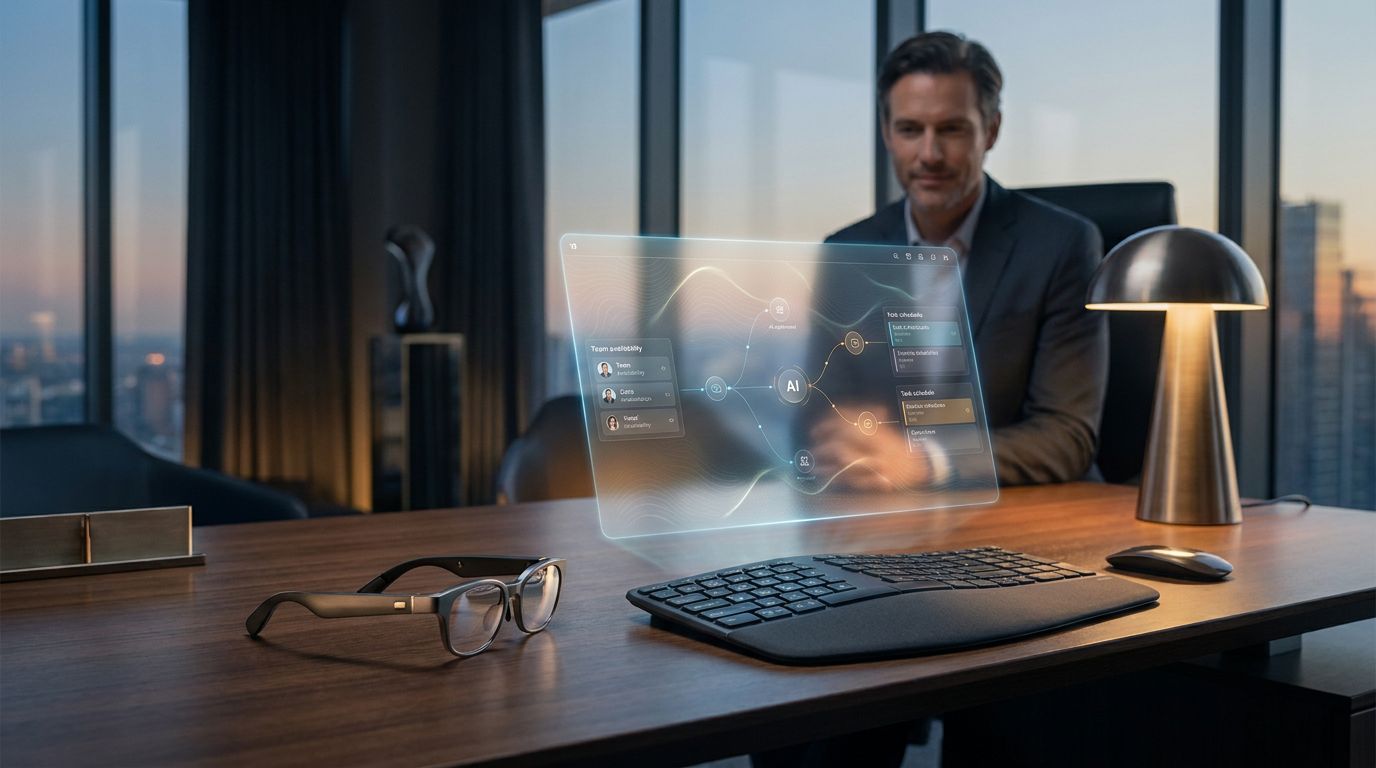
The Short Answer: AI's Impact on Desk Management
AI is revolutionizing desk management by automating routine tasks and optimizing workspace layouts, reducing the need for manual intervention. In 2026, tools like ScaleDesk are empowering small and mid-sized business owners to enhance customer service without hefty investments. AI's role in desk management is multifaceted, offering solutions that not only streamline operations but also enhance productivity by transforming how desks are organized and managed.
AI for desk management primarily focuses on two fronts: automating administrative tasks and optimizing physical spaces. Automation tools handle repetitive tasks such as scheduling, data entry, and customer interactions, freeing up human resources for more strategic roles. For example, AI can manage customer queries through chatbots, ensuring 24/7 support without the need for a full-time desk staff. This not only improves service quality but also cuts down operational costs significantly.
On the physical side, AI-driven desk organization tools analyze workspace usage patterns. They suggest optimal desk layouts and resource allocation to maximize efficiency. This is particularly beneficial for businesses with limited office space. By using AI to track how space is utilized, companies can avoid unnecessary expenditures on additional real estate while ensuring their current setup is used to its full potential.
AI productivity tools integrated into desk management systems also aid in prioritizing tasks. By analyzing data on deadlines, meetings, and workload, these tools can automatically adjust schedules to prevent bottlenecks and ensure smooth operations. Automated desk management solutions like these allow managers to focus on growth strategies rather than getting bogged down in day-to-day operational details.
The trade-off here lies in the initial setup and integration of AI systems, which can be time-consuming and require a learning curve. However, once implemented, the long-term benefits of AI in desk management are undeniable. As AI continues to evolve, its capabilities in workspace optimization and smart office solutions will undoubtedly expand, making it an indispensable tool for forward-thinking business owners.
Key AI Tools Enhancing Desk Organization
In 2026, AI has become a cornerstone of effective desk organization, particularly for small and mid-sized businesses aiming to optimize workspaces without hefty investments. ScaleDesk, a leading player in this arena, offers an array of AI-driven solutions designed to streamline both customer service and back-office operations. Here’s how AI tools are reshaping desk organization:
One of the standout features in AI for desk management is the integration of virtual assistants. These AI productivity tools automate routine tasks such as scheduling, email sorting, and task prioritization. By handling these mundane activities, virtual assistants free up significant time, allowing employees to focus on more strategic tasks. For example, ScaleDesk’s AI assistant can automatically categorize and prioritize emails based on urgency and relevance, reducing clutter and enhancing productivity.
Another critical tool is AI-powered analytics. These tools provide insights into workspace utilization and employee productivity. By analyzing patterns, businesses can identify underutilized spaces and optimize them for better use. This not only improves workspace efficiency but also contributes to overall employee satisfaction. ScaleDesk’s analytics feature offers detailed reports on desk usage and employee interaction, enabling managers to make data-driven decisions for workspace optimization.
AI-enhanced document management systems are also transforming desk organization. These systems use machine learning algorithms to categorize documents, making retrieval faster and more efficient. By automating the organization of digital files, businesses can reduce the time spent searching for documents and ensure that important information is always at hand. ScaleDesk offers a document management solution that integrates seamlessly with existing office software, ensuring a smooth transition to a more organized workspace.
For businesses looking to implement these smart office solutions, the trade-offs often involve initial setup time and training. However, the long-term benefits, such as increased efficiency and improved customer interactions, far outweigh these initial hurdles. By leveraging AI tools, businesses can achieve a level of desk organization that was previously unattainable, resulting in a more productive and streamlined office environment.
For more on how AI is boosting efficiency and optimizing space, check out our sections on Boosting Efficiency with AI-Powered Solutions and AI and Space Optimization: A Perfect Match.
Boosting Efficiency with AI-Powered Solutions
In the fast-paced world of business, efficiency isn't just a competitive advantage—it's a necessity. AI-powered solutions like ScaleDesk are transforming desk management by automating routine tasks and optimizing workflows. This means small and mid-sized business owners can enhance productivity without ballooning their costs.
One of the primary ways AI boosts efficiency is through task automation. ScaleDesk, for instance, can handle a range of back-office tasks that previously required manual input. From sorting customer emails to generating standard reports, this AI-driven tool ensures that mundane tasks no longer consume valuable human resources. By automating these processes, businesses can redirect their focus towards higher-value activities, such as strategic planning and customer engagement.
AI productivity tools also shine in their ability to manage customer interactions. With AI for desk management, customer inquiries can be automatically categorized and routed to the appropriate team members. This reduces response times and enhances customer satisfaction—a crucial metric for any business aiming to thrive. Furthermore, AI can analyze interaction patterns, providing insights that help businesses anticipate customer needs and tailor their services accordingly.
Beyond customer service, AI plays a pivotal role in workspace optimization. By analyzing data on how space is used, AI solutions can suggest the most efficient desk layouts and resource allocations. This not only maximizes physical workspace efficiency but also contributes to a more organized and productive environment. In fact, implementing smart office solutions can lead to a 20% increase in office productivity, according to recent studies.
To integrate AI into your desk management, start by identifying repetitive tasks that eat up your team's time. Next, evaluate AI tools like ScaleDesk that align with your business needs. It's crucial to involve your team in the transition, ensuring they understand how these tools will enhance their work rather than replace it. Finally, continuously measure the impact of AI on your operations, tweaking processes as necessary to ensure optimal performance.
In summary, AI-powered solutions provide a significant boost to efficiency by automating routine tasks, optimizing workflows, and enhancing customer service. For small and mid-sized businesses, embracing AI for desk management can mean the difference between struggling with inefficiencies and achieving streamlined operations that drive growth.
AI and Space Optimization: A Perfect Match
AI and space optimization are reshaping how businesses approach desk management. In 2026, the integration of AI for desk management has become a game-changer, particularly for small and mid-sized businesses. These companies, often constrained by budget and space, are finding innovative ways to maximize their workspace. AI's ability to analyze and adapt to spatial needs is at the heart of this transformation.
Take ScaleDesk, for instance. By leveraging AI, ScaleDesk offers smart office solutions that go beyond mere desk organization tools. The platform uses machine learning algorithms to analyze how space is utilized, suggesting optimal layouts that enhance both productivity and comfort. This is not just about fitting more desks into a room; it's about creating an environment where employees can thrive.
Here’s how AI achieves this:
- Data-Driven Insights: AI systems in desk management gather data on employee movement, usage patterns, and workspace interactions. This information is crucial for understanding how space is used and identifying inefficiencies.
- Dynamic Space Allocation: AI can dynamically allocate desk spaces based on real-time needs. For example, if a meeting room is underutilized, AI can suggest converting it into a hot-desking area during peak hours, optimizing the available space without any physical restructuring.
- Predictive Analytics: By predicting future space requirements, AI helps businesses plan for growth without overcommitting to new leases or renovations. This foresight is invaluable for businesses looking to scale sustainably.
- Automated Adjustments: AI can automate environmental adjustments such as lighting and temperature, tailoring these to individual preferences and times of day. This not only enhances employee well-being but also reduces energy consumption, aligning with sustainability goals.
The trade-off here is the initial investment in AI technology, which can be significant. However, the long-term savings in space costs and increased employee productivity often justify the expense. For founders and managers, the ability to offer a more flexible, efficient workspace can be a compelling advantage in attracting and retaining talent.
In conclusion, AI and space optimization are indeed a perfect match. By transforming how businesses utilize their workspaces, AI is not only making desk management smarter but also paving the way for more agile and responsive work environments. As AI continues to evolve, its role in workspace optimization will only grow, offering even more sophisticated solutions for the challenges of modern office life.
Real-World Examples of AI in Desk Management
AI for desk management is no longer a futuristic concept; it's a practical reality with tangible benefits. Let's explore how businesses are leveraging AI to streamline desk operations, using tools like ScaleDesk as a cornerstone.
1. Automating Routine Tasks:
One of the most significant advantages of AI in desk management is its ability to handle repetitive tasks. For example, ScaleDesk can automate the scheduling of meetings, manage task lists, and prioritize emails, freeing up valuable time for more strategic activities. By utilizing natural language processing, these tools can even draft responses to common inquiries, ensuring that customer service remains uninterrupted and efficient.
2. Enhancing Customer Interactions:
Small and mid-sized businesses often struggle with maintaining high-quality customer service due to limited resources. AI tools like ScaleDesk can analyze customer interactions in real-time, providing insights that help improve service delivery. For instance, AI can identify patterns in customer inquiries, allowing businesses to proactively address common issues before they escalate. This not only enhances customer satisfaction but also reduces the workload on human staff.
3. Optimizing Workspace Utilization:
AI-driven desk management isn't just about digital tasks; it also extends to physical space optimization. ScaleDesk uses AI algorithms to analyze workspace usage patterns, offering recommendations for better layout configurations. This can lead to more efficient use of office space, reducing overhead costs and improving employee productivity. Imagine a smart office that automatically adjusts seating arrangements based on daily attendance and team collaboration needs—AI makes this possible.
4. Integrating with Other Smart Office Solutions:
AI for desk management works best when integrated with other smart office solutions. ScaleDesk, for instance, can sync with IoT devices like smart lighting and climate control systems, creating an environment that adapts to the needs of its occupants. This integration not only boosts productivity but also enhances employee well-being by ensuring optimal working conditions at all times.
These real-world applications of AI in desk management demonstrate the profound impact technology can have on everyday business operations. By automating routine tasks, enhancing customer interactions, optimizing workspace usage, and integrating with smart office solutions, AI is transforming how businesses manage their desks and offices. As we move forward, the role of AI in desk management will only grow, offering even more sophisticated solutions for businesses looking to stay competitive.
Future Trends: What to Expect in AI Desk Management
As we look ahead in the world of AI for desk management, several trends are poised to redefine how small and mid-sized businesses approach workspace optimization. One key development is the integration of AI with IoT devices, creating fully automated desk environments. Imagine a workspace where lighting, temperature, and even desk height adjust automatically based on the user's preferences and daily schedule. This seamless integration not only enhances comfort but also boosts productivity by reducing manual adjustments and distractions.
Another trend to watch is the expansion of AI-powered analytics in desk management. Businesses are increasingly using AI to analyze workspace usage patterns, enabling them to make data-driven decisions about office layouts and resource allocation. For instance, ScaleDesk could analyze peak usage times and suggest optimal seating arrangements to maximize space utilization. This approach not only cuts costs but also improves employee satisfaction by ensuring everyone has access to the resources they need when they need them.
The rise of AI productivity tools tailored for desk management is also on the horizon. These tools will go beyond simple task automation, offering predictive insights and recommendations. For example, AI could anticipate when a team member is likely to need a specific document or resource and have it ready before they even request it. By minimizing downtime and streamlining workflows, these tools will empower teams to focus on strategic tasks rather than mundane ones.
In addition, the focus on sustainability in desk management is set to grow, with AI playing a crucial role. AI can optimize energy consumption by intelligently managing office equipment and utilities based on real-time data. This not only reduces the carbon footprint of a business but also lowers operational costs, aligning with the growing demand for environmentally responsible practices.
Finally, the future of AI in desk management will likely see increased personalization. As AI systems become more sophisticated, they will offer highly customized experiences tailored to individual preferences and working styles. This level of personalization will be instrumental in attracting and retaining talent, as employees increasingly seek workplaces that cater to their unique needs.
These trends indicate that AI for desk management is not just about automating tasks but transforming the entire workspace experience. Businesses that embrace these innovations will not only enhance efficiency but also create more engaging and adaptive environments for their teams. As technology evolves, staying ahead of these trends will be crucial for maintaining a competitive edge in the ever-changing business landscape.
FAQ
How does AI improve desk organization?
AI improves desk organization by automating routine tasks, optimizing space, and providing smart scheduling and filing solutions.
What are some AI tools for desk management?
AI tools for desk management include smart assistants, automated filing systems, and AI-driven scheduling applications.
Can AI help with workspace optimization?
Yes, AI can analyze workspace layouts to suggest optimal arrangements, enhancing productivity and comfort.
Are there any real-world examples of AI in desk management?
Yes, many businesses have successfully implemented AI for desk management, improving efficiency and organization.