
Best Tips for Nursing Exam Preparation in 2026
Discover top nursing exam tips for 2026 to excel in your TEAS 7 and HESI A2 exams. Prepare effectively and succeed on your first try with these strategies.
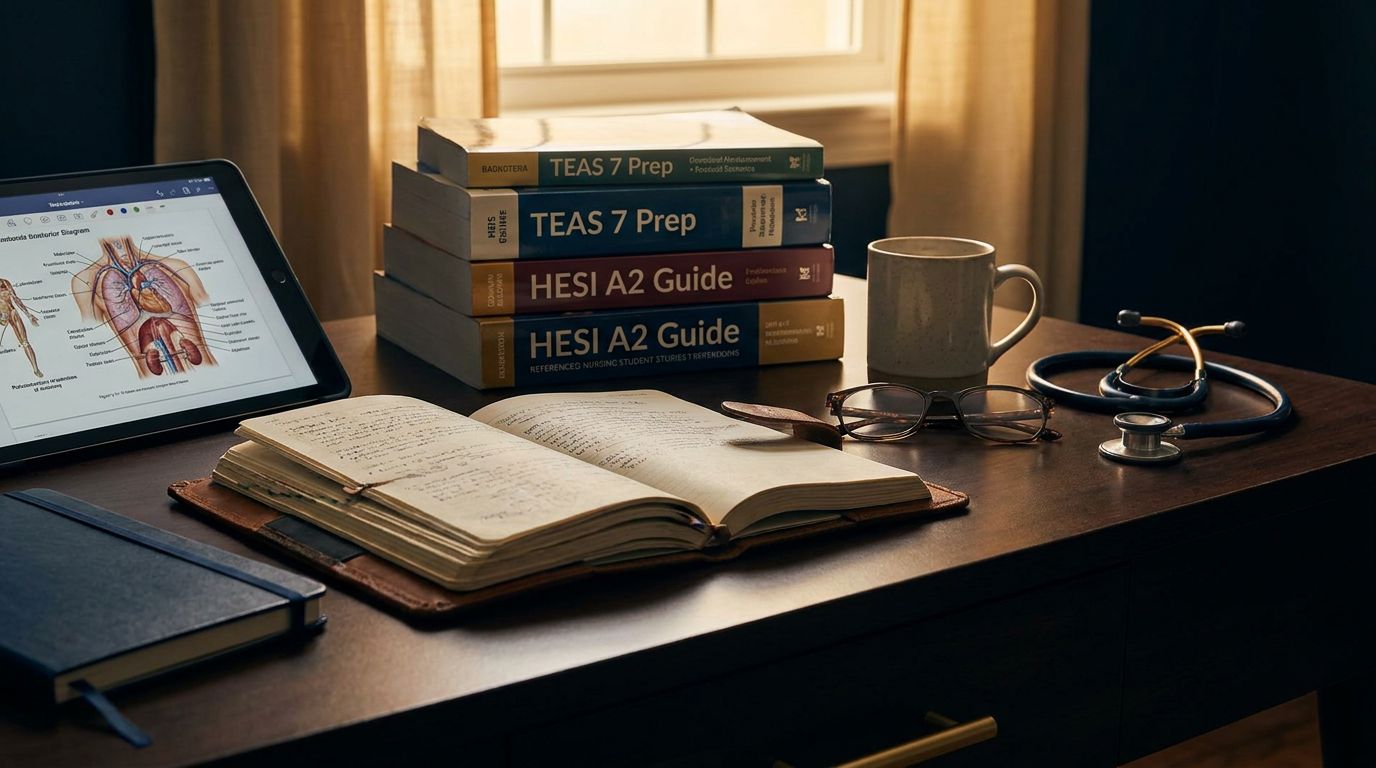
The short answer: top nursing exam tips for 2026
To ace your nursing exams in 2026, focus on targeted practice and leveraging adaptive learning tools like NurseHub. This approach ensures you hone in on your weaknesses while reinforcing your strengths, crucial for exams like the TEAS 7 and HESI A2.
Start by familiarizing yourself with the specific content areas of your exams. The TEAS 7, for example, covers reading, math, science, and English language usage. Understanding the weight of each section can help you allocate study time effectively. Similarly, the HESI A2 includes additional components like chemistry and anatomy, requiring a broader preparation strategy.
Leverage adaptive learning platforms to tailor your study sessions. Apps like NurseHub offer personalized quizzes and practice tests that adjust to your performance. This method not only highlights areas needing improvement but also prevents overconfidence in topics you're already proficient in. Adaptive learning is a game-changer, allowing you to focus study time where it's needed most.
Create a consistent study schedule. Dedicate specific blocks of time each day to different subjects. This routine helps in building a habit and ensures comprehensive coverage of all exam topics. Breaks are essential; research shows that short, frequent breaks improve retention and reduce burnout.
Utilize active recall and spaced repetition techniques. These study methods are proven to enhance memory retention. Active recall involves testing yourself on the material repeatedly, while spaced repetition schedules reviews at increasing intervals. Both techniques are integral to effective nursing exam preparation.
Lastly, stay updated with any changes in the exam formats. Testing bodies occasionally adjust content or question styles, and being aware of these changes can give you a competitive edge. Subscribe to newsletters from official exam bodies or join online forums for nursing students to stay informed.
Incorporating these nursing exam tips can significantly boost your chances of passing on the first try. With the right strategy and tools, like those offered by NurseHub, you'll be well-prepared to tackle the challenges of the TEAS 7 and HESI A2 exams.
Understand the test format and structure
Navigating the labyrinth of nursing exams requires more than just raw knowledge; understanding the test format and structure is crucial. The TEAS 7 and HESI A2 exams, pivotal assessments for nursing students, each have their unique structures that can greatly influence your study approach.
The TEAS 7 exam, updated recently to better assess the skills necessary for nursing school success, consists of four main sections: Reading, Mathematics, Science, and English and Language Usage. Each section is rigorously timed, with the Reading section allowing 64 minutes for 53 questions, while the Mathematics section grants 54 minutes for 36 questions. Knowing these specifics allows you to tailor your time management strategies effectively. For instance, practice pacing yourself to answer reading questions in just over a minute each.
On the other side, the HESI A2 exam is more of a comprehensive assessment, covering up to eight different areas, including Anatomy & Physiology and Chemistry. Each section of the HESI A2 can vary in length and question count, making it essential to familiarize yourself with the sections most relevant to your nursing program. Schools often customize which sections are required, so check with your program to focus your preparation wisely.
Here are actionable steps to get a firm grasp on these test structures:
- Review the official guidelines: Both exams have official guidelines that detail their format. Utilize these documents to understand the types of questions you'll face.
- Practice with structure in mind: Use practice exams to simulate real test conditions. For TEAS 7, this means practicing with time constraints that mirror the actual exam.
- Identify your weak spots: As you practice, note which sections consume more of your time and adjust your study sessions accordingly. This targeted approach can turn weaknesses into strengths.
- Utilize resources like NurseHub: Platforms like NurseHub offer tailored practice exams and study guides that reflect the current test formats, helping you become adept at managing both content and time.
Understanding the format of these exams is not just about knowing what to expect; it's about strategizing your preparation to maximize performance. By focusing on the structure, you ensure that your study techniques for nurses are not just about cramming information, but are strategically aligned with how you'll be tested. For more on how to incorporate these insights into your study plan, see Develop a strategic study plan.
Utilize practice exams and real questions
Incorporating practice exams and real questions into your study routine is a game-changer for nursing exam preparation. For many students, the TEAS 7 and HESI A2 exams are not just tests; they are gateways to a nursing career. Therefore, familiarity with the types of questions you'll encounter is crucial. NurseHub offers a rich repository of practice exams and real questions tailored specifically for these exams, making it an invaluable resource.
Start by integrating practice exams into your study plan early. Allocate specific days for taking full-length practice exams under timed conditions, mirroring the actual test environment. This approach helps you manage time effectively, reduce anxiety, and identify areas where you need more focus. For instance, if you consistently struggle with the science section, you'll know to allocate additional study time to that area.
Using real questions from previous exams is equally important. These questions give you insight into the examiners' mindset and the kinds of problems they deem essential. NurseHub's database includes a variety of real questions that have appeared in past TEAS 7 and HESI A2 exams. By practicing with these, you can hone your problem-solving skills and increase your confidence.
Here’s how to make the most of these resources:
- Set a Schedule: Dedicate specific times each week to tackle practice exams. Consistency is key.
- Simulate Exam Conditions: Take practice tests in a quiet environment, adhering strictly to the time limits. This will help you get comfortable with the pressure of the real exam.
- Review and Reflect: After each practice exam, review your answers thoroughly. Understand why you got a question wrong and learn the correct approach. This reflection will solidify your understanding.
- Track Progress: Keep a journal or digital record of your scores and note any recurring weaknesses. Over time, you’ll see patterns that will guide your study priorities.
By systematically using practice exams and real questions, you transform your preparation from passive reading to active learning. This method not only boosts your readiness but also sharpens the critical thinking skills vital for nursing. As you progress, you'll find yourself more adept at navigating the complexities of the TEAS 7 and HESI A2, ultimately positioning you for success on exam day.
Develop a Strategic Study Plan
Crafting a strategic study plan is essential for effective nursing exam preparation, especially when you're targeting success in the TEAS 7 and HESI A2 exams. Both exams require a deep understanding of a broad range of topics, from mathematics and science to language skills and critical thinking. To tackle these, your study plan should be both comprehensive and tailored to your unique learning style and schedule.
Start by assessing your strengths and weaknesses in each subject area. This self-assessment will help you allocate more time to areas where you need improvement. For instance, if you find math challenging, dedicate more hours to practice and review in this area. Use resources like NurseHub, which offers specific modules for TEAS 7 and HESI A2 topics, to guide your study sessions with targeted content.
Once you have your self-assessment, break your study plan into manageable chunks. This could mean setting daily or weekly goals, ensuring that each study session has a clear focus. For example, assign Mondays for science, Wednesdays for math, and Fridays for reading comprehension. This structured approach prevents burnout and keeps you motivated by allowing you to see consistent progress.
Incorporate various study techniques for nurses to reinforce learning. Active recall, spaced repetition, and concept mapping are effective methods. Active recall involves testing yourself on the material, while spaced repetition helps with long-term retention by revisiting topics at increasing intervals. Concept mapping, on the other hand, allows you to visualize relationships between different concepts, making complex information easier to digest.
Balance your study plan with adequate breaks and leisure activities. Overloading your brain can diminish your efficiency and lead to burnout. Use techniques like the Pomodoro Technique—study intensely for 25 minutes, then take a 5-minute break—to maintain high levels of focus and energy. This approach promotes sustained attention and provides mental relief, crucial for maintaining stamina during your preparation period.
Finally, regularly review and adjust your study plan. As you progress, some areas will naturally become stronger, allowing you to reallocate time and effort to weaker subjects. This dynamic approach ensures that your preparation remains aligned with your evolving needs and the specific demands of the TEAS 7 and HESI A2 exams.
Incorporate active learning techniques
Active learning techniques are a game-changer for nursing exam preparation. They shift the focus from passive absorption to active engagement, ensuring that information sticks. This is particularly valuable for exams like TEAS 7 and HESI A2, where critical thinking and application of knowledge are tested.
To incorporate active learning, start by utilizing the power of teaching others. When you explain a concept to a peer, you reinforce your understanding and identify any gaps in your knowledge. This technique is especially effective for complex topics like anatomy or pharmacology, which are crucial for nursing exams. If you don't have a study partner, consider teaching to an imaginary audience or even recording yourself.
Another effective method is creating concept maps. These visual tools help you organize and connect information, making it easier to recall during the exam. For instance, when studying the cardiovascular system, map out how the heart, blood vessels, and blood interact. This not only aids memory but also enhances your ability to apply knowledge to different scenarios.
Role-playing is another dynamic method to embed learning. Simulate clinical situations that might appear in the exam, such as patient interactions or emergency responses. This practice not only prepares you for the exam but also hones your clinical skills. You can do this with a group or even by yourself, imagining different scenarios and how you would respond.
Incorporating active recall is also vital. This involves testing yourself on the material without looking at your notes. Use flashcards or apps like NurseHub to quiz yourself on key concepts. The act of retrieving information strengthens your memory and boosts confidence.
Finally, engage in group discussions. Discussing topics with peers exposes you to different perspectives and clarifies complex concepts. Platforms like NurseHub offer community forums where you can join discussions and gain insights from fellow nursing students.
These active learning techniques not only enhance your nursing exam preparation but also improve your practical skills, setting you up for success in both exams and your future nursing career.
Manage stress and maintain a healthy lifestyle
Navigating the rigors of nursing exam preparation can be a major stressor. While the focus is often on study techniques and understanding exam formats, maintaining a healthy lifestyle is just as crucial for optimal performance. Stress management is not merely a supplementary activity but a strategic component of your nursing exam success.
First, prioritize sleep. It’s tempting to pull all-nighters, especially when exam day looms, but sleep is critical for memory consolidation and cognitive function. Aim for 7-9 hours per night. Establish a consistent sleep schedule and create a restful environment by minimizing screen time before bed and keeping your room dark and cool.
Next, incorporate physical activity into your routine. Regular exercise reduces stress hormones and stimulates the production of endorphins, which improve mood and energy levels. You don’t need to spend hours at the gym; a brisk 30-minute walk or a quick yoga session can be effective. Find an activity that you enjoy and can stick with consistently.
Nutrition also plays a vital role in stress management. Eating a balanced diet with plenty of fruits, vegetables, lean proteins, and whole grains supports brain health and energy levels. Avoid excessive caffeine and sugar, which can lead to energy crashes and heightened anxiety. Instead, opt for foods rich in omega-3 fatty acids, like salmon or walnuts, which are known to support cognitive function.
Mindfulness practices such as meditation and deep-breathing exercises can help manage anxiety and improve focus. Start with just five minutes a day and gradually increase as you become more comfortable. Apps like NurseHub offer resources for incorporating these techniques into your study routine.
Finally, don’t underestimate the power of social support. Connect with fellow nursing students or reach out to mentors for encouragement and advice. Sharing your experiences and challenges can provide perspective and reduce feelings of isolation.
In summary, while it's essential to focus on specific nursing exam tips and strategies, managing stress and maintaining a healthy lifestyle are equally important. By prioritizing sleep, exercise, nutrition, mindfulness, and social connections, you’ll be better equipped to handle the pressures of nursing exam preparation and perform at your best.
FAQ
What are the best ways to study for the TEAS 7 exam?
Focus on understanding the test format, practice with real questions, and use active learning techniques to reinforce your knowledge.
How can I improve my test-taking skills for nursing exams?
Regularly practice with timed exams, review your answers to understand mistakes, and develop strategies for managing test anxiety.
What resources are available for HESI A2 exam preparation?
Resources include practice exams, study guides, online courses, and platforms like NurseHub that offer real exam questions.
How important is time management in nursing exam preparation?
Time management is crucial as it helps ensure you cover all necessary topics and reduces last-minute cramming and stress.