The Rise of AI in Remote Landscape Design: What You Need to Know
Discover how AI is revolutionizing remote landscape design and its impact on the industry. Learn about the benefits and future trends.
AI's Impact on Remote Landscape Design: A Quick Overview
AI is revolutionizing remote landscape design by making it more accessible and efficient for both designers and clients. The integration of AI in landscape design technology allows for precise, data-driven decisions that enhance creativity and reduce project timelines. With tools like NG Studio, homeowners, architects, and developers can collaborate on outdoor spaces without the need for in-person meetings, expanding possibilities beyond geographical constraints.
The process begins with AI's ability to analyze vast amounts of data quickly. This includes environmental factors, client preferences, and historical design trends. By processing this information, AI can generate initial design concepts that align closely with client needs and site-specific conditions. For instance, AI can assess sunlight patterns, soil type, and local climate to suggest optimal plant selections and layout configurations.
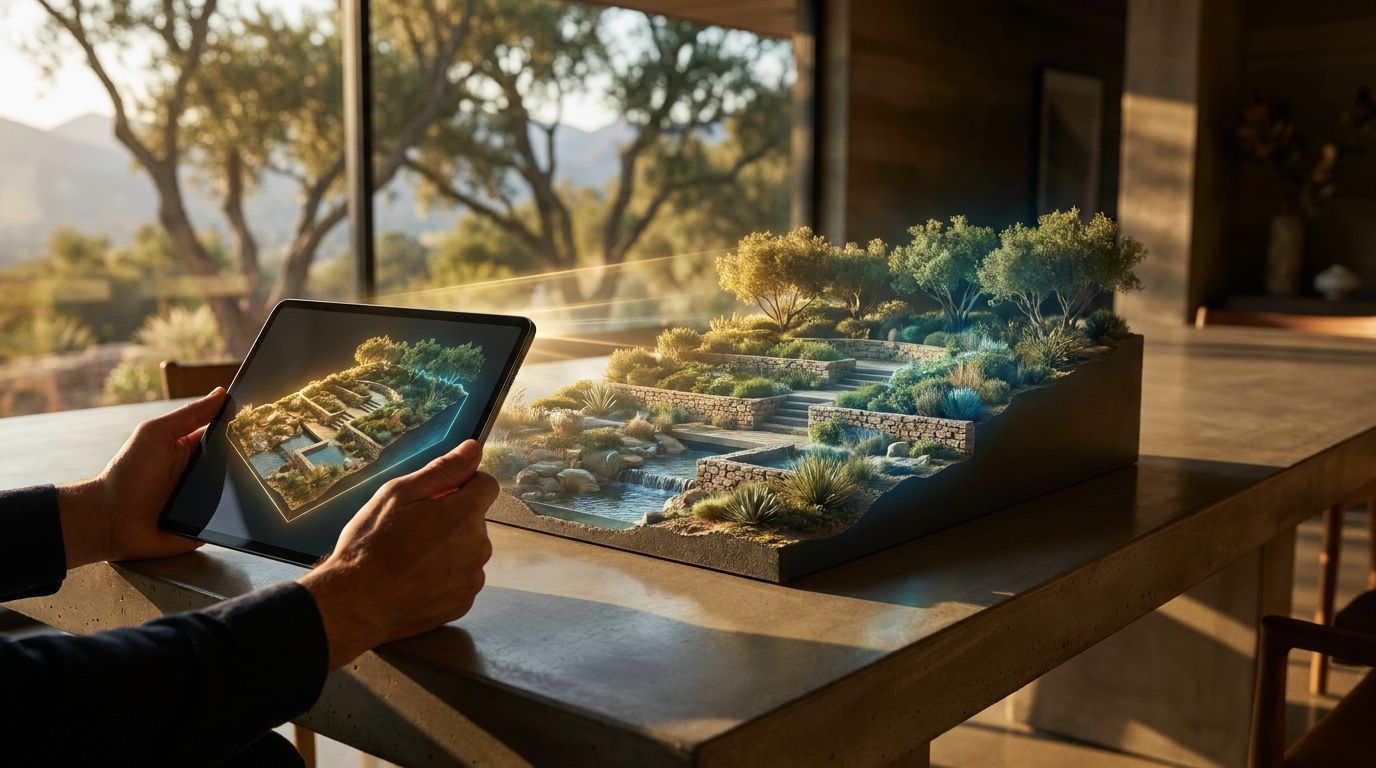
AI's role doesn't stop at data analysis. It also enhances visualization capabilities through 3D landscape visualization and virtual landscape design. These technologies allow clients to experience a digital walkthrough of their proposed outdoor space before a single stone is placed. This immersive experience not only aids in decision-making but also helps manage expectations and minimize costly revisions during the construction phase.
Moreover, AI-driven landscape architecture software improves collaboration among stakeholders. Architects and developers can share and refine designs in real-time, regardless of their physical location. This is particularly valuable for projects in remote areas or for international clients who require remote design services. The seamless integration of AI in architecture ensures that all parties remain aligned and informed throughout the project lifecycle.
However, the adoption of AI in remote landscape design is not without its challenges. Designers must balance the precision of AI-generated designs with the nuanced understanding of human creativity and client interaction. Despite these challenges, the benefits of AI in landscape design technology are undeniable, offering a more streamlined, efficient, and creative approach to designing outdoor spaces. As AI continues to evolve, its impact on remote landscape design will likely grow, setting new standards for innovation and collaboration in the industry.
How AI Enhances Design Precision and Creativity
In the realm of ai remote landscape design, precision and creativity often seem at odds. Yet, AI bridges this gap by offering tools that enhance both aspects simultaneously. NG Studio, for instance, leverages advanced AI technologies to transform how landscapes are imagined and executed. Here's how AI is reshaping the landscape design process for homeowners, architects, and developers alike.
AI-driven landscape design technology provides precise measurements and simulations that reduce errors and streamline the design process. With AI, you can generate detailed 3D models of your outdoor space, allowing for accurate planning and visualization. These models account for real-world variables like sun exposure, soil conditions, and local climate, ensuring that your designs are not only aesthetically pleasing but also functional and sustainable. This precision aids architects and developers in creating spaces that are both innovative and compliant with local regulations.
Moreover, AI enhances creativity by offering a vast array of design possibilities. AI tools can analyze trends, suggest design elements, and even generate entire design concepts based on user input. This capability is particularly beneficial in virtual landscape design, where visualizing the potential of a space can be challenging. By using AI, you can explore multiple design scenarios quickly, leading to more innovative and personalized outcomes. For example, AI can propose creative plant arrangements that maximize visual appeal while maintaining ecological balance.
AI also aids in collaborative efforts, a crucial aspect of remote design services. Tools like NG Studio facilitate seamless communication between clients and designers, allowing for real-time feedback and adjustments. This collaborative approach not only enhances creativity but also ensures that the final design aligns closely with the client's vision. By integrating AI into the design process, stakeholders can achieve a higher level of customization and satisfaction.
For those in architecture, AI in architecture tools can be integrated with landscape architecture software, providing a comprehensive solution that covers both structural and environmental design needs. This integration is essential for developers requiring detailed construction documentation, as it ensures that all aspects of a project are considered from the outset.
Ultimately, AI in remote landscape design offers a powerful blend of precision and creativity, enabling stakeholders to create outdoor spaces that are both beautiful and functional. For more insights on how AI is impacting this field, check out our section on Benefits of AI for Remote Landscape Services. Additionally, if you're interested in exploring the latest tools, our guide on Choosing the Right AI Tools for Your Landscape Project can be a valuable resource.
Benefits of AI for Remote Landscape Services
AI in remote landscape design is transforming how homeowners and professionals approach outdoor space enhancement. With tools like NG Studio, users can tap into a multitude of benefits that streamline processes, enhance creativity, and improve precision. Here’s a closer look at the specific advantages AI brings to remote landscape services.
One of the primary benefits is accessibility. AI-powered platforms enable homeowners, architects, and developers to access expert landscape design services without geographical constraints. This means a homeowner in Kazakhstan can consult with top designers from anywhere in the world, expanding the pool of expertise beyond local limitations.
Efficiency is another significant advantage. AI tools can automate repetitive tasks such as generating initial design concepts or performing site analyses. This frees up time for designers to focus on more creative aspects of the project. For instance, AI can quickly analyze soil types, climate data, and topography to suggest suitable plant species and materials, accelerating the planning phase.
AI also enhances precision in design. Using advanced landscape architecture software, designers can create highly detailed 3D landscape visualizations. These visualizations are not just aesthetically pleasing; they provide an accurate representation of how the final design will look and function. This level of detail is crucial for developers who need precise construction documentation to ensure project feasibility and compliance.
Customization is another area where AI shines. With AI, remote design services can offer personalized recommendations based on user preferences and environmental conditions. This means that a landscape design is not only beautiful but also functional and sustainable, tailored to the specific needs of the homeowner or the project's environmental requirements.
Cost-effectiveness is a compelling benefit as well. By reducing the need for physical site visits and leveraging virtual landscape design capabilities, AI can significantly cut down on expenses associated with traditional landscape design processes. This makes professional landscape design more accessible to a broader audience, including those with limited budgets.
In summary, AI in remote landscape design offers a range of benefits, from increased accessibility and efficiency to enhanced precision and customization. For those using platforms like NG Studio, these advantages translate into more creative, cost-effective, and sustainable outdoor spaces.
Challenges and Considerations in AI Landscape Design
As AI technologies increasingly shape the landscape design industry, several challenges and considerations emerge that can impact both service providers and clients. One primary concern is data privacy and security. With AI in architecture and landscape design relying heavily on data inputs for custom solutions, protecting client information becomes paramount. Remote design services must ensure that data is encrypted and stored securely to prevent breaches.
Another challenge is the integration of AI tools with existing landscape architecture software. Many firms and professionals have established workflows that rely on specific software. Introducing AI requires a seamless transition to avoid disrupting these workflows. This often necessitates additional training and adaptation periods, which can temporarily slow down productivity. It's crucial for firms to evaluate the compatibility of AI tools with their current systems and plan for integration phases that minimize disruption.
AI's reliance on data also introduces the issue of accuracy. Algorithms are only as good as the data they are fed. Inaccurate or biased data can lead to suboptimal design outcomes. For instance, if an AI tool is trained on data that doesn't consider regional flora or local climate nuances, the resulting designs might not be practical or sustainable. To mitigate this, designers should ensure that their AI systems are trained using diverse and comprehensive datasets that reflect the specific environmental conditions of the project location.
Additionally, while AI can enhance design precision and creativity, it can also lead to a homogenization of design styles. As AI tools become more prevalent, there's a risk that designs start to look similar if they're generated from the same algorithms and datasets. This can stifle creativity and make it challenging for firms to differentiate themselves in a competitive market. To counter this, designers should use AI as a tool to augment their creativity rather than replace it, ensuring that human intuition and unique design perspectives remain central to their work.
Finally, cost is a significant consideration. Implementing AI landscape design technology can be expensive, both in terms of initial investment and ongoing maintenance. Smaller firms or independent designers may find these costs prohibitive. It's essential to weigh the long-term benefits of AI, such as increased efficiency and design capabilities, against the upfront costs and determine if it aligns with business goals.
In summary, while AI remote landscape design offers exciting possibilities, navigating these challenges requires careful planning and strategic implementation. Balancing the benefits of technology with these considerations will be key to successfully integrating AI into landscape design practices.
Future Trends in AI and Landscape Design
As we navigate through 2026, AI continues to redefine the landscape design industry, pushing the boundaries of what's possible in remote services. One of the most exciting trends is the integration of AI with augmented reality (AR) to create immersive design experiences. This technology allows homeowners and developers to visualize their projects in a real-world context before a single shovel hits the dirt. Imagine walking through a virtual garden that overlays your existing yard, helping you make informed decisions about plant placement and hardscape features.
AI-driven sustainability is another burgeoning trend. As environmental concerns grow, AI tools are increasingly used to design landscapes that are not only beautiful but also ecologically responsible. These tools can analyze local climate data, predict plant growth patterns, and optimize water usage, ensuring that every design is as eco-friendly as possible. Landscape architects and developers can leverage these insights to create sustainable outdoor spaces that align with environmental goals and regulations.
The rise of machine learning in landscape architecture software is also noteworthy. By analyzing vast datasets, AI can offer predictive insights into design trends and user preferences. This means that architects using NG Studio, for instance, can anticipate changes in client demands and adapt their design strategies accordingly. Machine learning can also streamline the design process by automating repetitive tasks, such as generating construction documentation or creating 3D landscape visualizations, freeing up designers to focus on creative aspects.
Moreover, AI's role in remote design services is set to expand further with the advent of more sophisticated collaboration tools. These tools facilitate seamless communication between clients and designers, regardless of geographical barriers. They support real-time modifications, ensuring that projects remain aligned with client visions. As AI continues to evolve, these collaborative platforms will become more intuitive, allowing for even more personalized and efficient design processes.
Finally, the convergence of AI with Internet of Things (IoT) devices is set to transform landscape maintenance. Smart sensors can monitor soil conditions, weather forecasts, and plant health, feeding this data back into AI systems to provide actionable maintenance recommendations. This integration not only enhances the longevity of landscape designs but also reduces the need for manual interventions, offering a smarter, more connected approach to landscape management.
In summary, the future of AI in landscape design is bright, with technology paving the way for more immersive, sustainable, and efficient design solutions. As these trends continue to develop, those in the industry must stay informed and adaptable, leveraging the latest tools to meet evolving client needs and environmental challenges.
Choosing the Right AI Tools for Your Landscape Project
Selecting the right AI tools for your landscape project can make or break the final outcome. With the rise of AI in remote landscape design, it's crucial to choose software that aligns with your specific needs, whether you're a homeowner, architect, or developer. Here's a guide to help you make informed decisions.
First, assess the scope of your project. Homeowners might prioritize user-friendly interfaces and visualization features, such as 3D landscape visualization. Tools like NG Studio provide intuitive platforms where you can experiment with various design elements in a virtual setting, allowing you to visualize your dream garden or outdoor space before any physical changes occur.
Architects and developers, on the other hand, might require more robust capabilities. Look for landscape architecture software that offers detailed construction documentation and integrates seamlessly with existing architectural tools. This ensures that your designs are not only aesthetically pleasing but also structurally sound and compliant with local regulations. NG Studio, for example, supports remote design services, making it easier to collaborate with teams and clients across different locations.
Next, consider the technology's adaptability and scalability. As AI continues to evolve, so should your tools. Choose software that receives regular updates and incorporates the latest in AI advancements. This will keep your designs innovative and competitive. Additionally, ensure the software can scale with your business or project needs, whether you're expanding a single garden or developing a large residential area.
Integration is another key factor. Your chosen tools should work well with other technologies you use. For instance, if you're using AI in architecture for broader projects, your landscape design technology should complement these efforts rather than complicate them. Seamless integration can save time and reduce errors, enhancing overall productivity.
Finally, don't overlook customer support and community resources. As with any technology, having access to a robust support system and a community of users can provide invaluable insights and troubleshooting assistance. This support can be crucial when navigating complex designs or troubleshooting technical issues.
By carefully selecting the right AI tools tailored to your project's specific needs, you can leverage the full potential of AI in remote landscape design, ensuring efficient, creative, and successful outcomes.
FAQ
How does AI improve landscape design?
AI improves landscape design by providing accurate data analysis, enhancing creative possibilities, and enabling remote collaboration.
What are the benefits of remote landscape design?
Remote landscape design offers flexibility, cost savings, and access to a wider range of expertise without geographical constraints.
Can AI replace human landscape designers?
AI cannot fully replace human designers but can significantly enhance their capabilities by providing data-driven insights and creative tools.
What tools are used in AI landscape design?
Tools like 3D modeling software, AI-driven design platforms, and drone technology are commonly used in AI landscape design.