
Best Practices for Upscaling Images for Print in 2026
Learn the best practices for upscaling images for print in 2026. Discover techniques and tools to enhance your print quality effectively.
What is upscaling images for print?
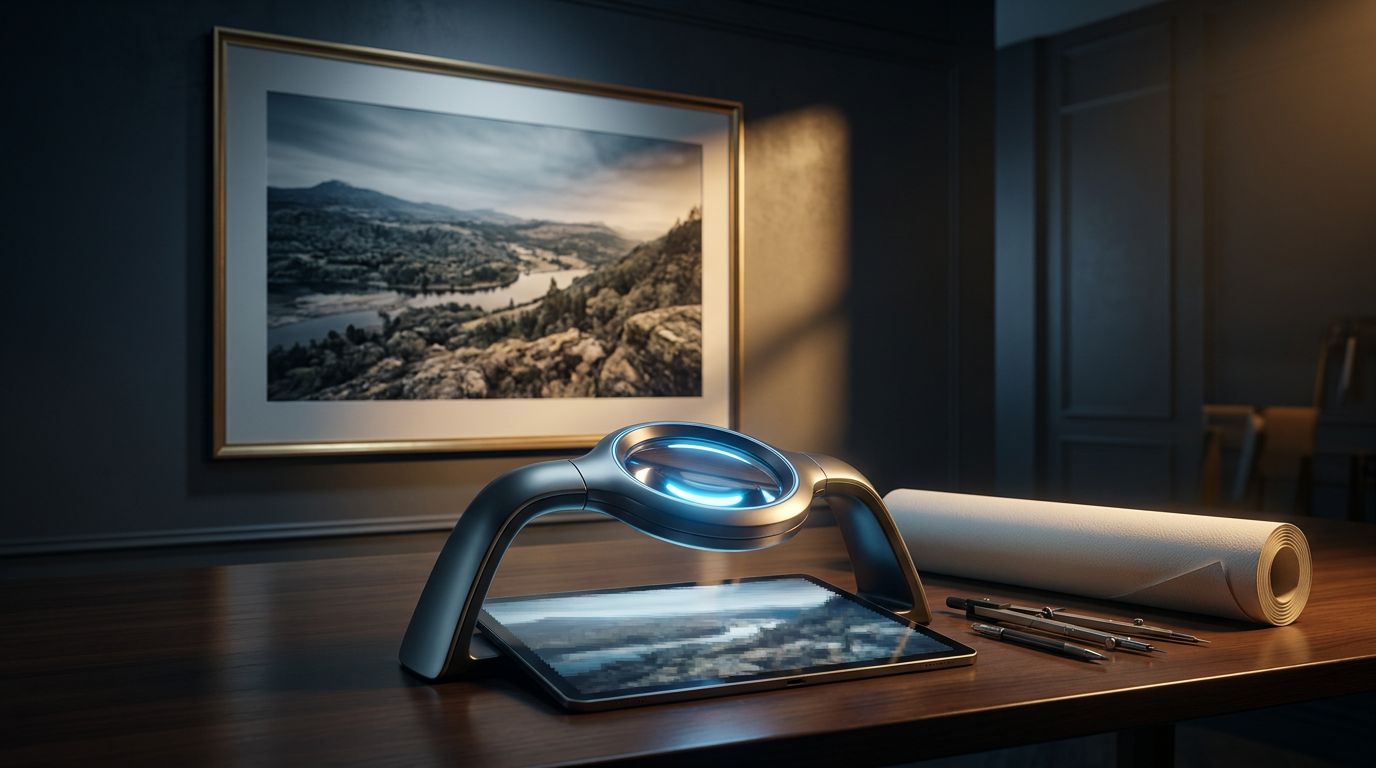
Upscaling images for print involves increasing the resolution and dimensions of a digital image to meet the requirements of print media without losing quality. It's not just about making images bigger—it's about enhancing them to maintain clarity and detail when printed. This process is crucial because print media demands higher resolutions than digital screens, typically measured in DPI (dots per inch). For a high-quality print, 300 DPI is the gold standard.
Why upscaling images for print matters
Print demands precision. Unlike digital displays, which can mask low resolution with backlighting, print exposes every pixel. When images are upscaled improperly, they can appear blurry or pixelated in print. This is where ImageUpscaler and similar technologies come into play, using advanced algorithms to ensure that images retain their sharpness and detail. The stakes are high for photographers, designers, and content creators who rely on print for portfolios, advertisements, or art pieces. In this context, the quality of the image can make or break a project.
How to get started
Embarking on the journey of upscaling images for print requires a strategic approach:
- Assess Your Needs: Determine the final print size and the DPI required. This will guide how much you need to upscale your image.
- Choose the Right Tool: Select a tool that offers robust upscaling capabilities. Tools like ON1 Resize AI 2026, which can enlarge photos by up to 700% while maintaining quality, are excellent choices (source: Vertex AI Search).
- Optimize the Original Image: Start with the highest quality original image available. The better the starting point, the better the result.
- Use AI Enhancements: Leverage AI features to enhance textures and details. Adobe Photoshop's Super Resolution, which can output files up to 10 times the original RAW size, is an example of AI's power in this space (source: Vertex AI Search).
- Check Color Profiles: Ensure that the image uses the correct color profile for print, typically CMYK, to avoid color mismatches.
Common pitfalls and how to avoid them
Navigating the process of upscaling images for print can be fraught with challenges. Here are common pitfalls and how to sidestep them:
- Over-Scaling: While AI tools can upscale significantly, pushing an image beyond 2-4 times its original size can lead to distortion. Stick within these limits to preserve quality.
- Ignoring Color Profiles: Always convert images to the correct color profile for print (CMYK). Failing to do so can result in unexpected color shifts.
- Neglecting Detail Enhancement: Use AI tools that focus on enhancing details, not just enlarging the image. The latest tools like Topaz Gigapixel AI, which incorporates nine specialized AI models, are designed for this purpose (source: Vertex AI Search).
- File Format Mistakes: Save your final image in a print-friendly format such as TIFF or a high-quality JPEG. Avoid formats like PNG, which are not optimized for print.
"The quality of a print is determined long before the ink hits the paper. It's in the pixels, the resolution, and the attention to detail during the upscaling process."
By understanding these pitfalls and taking proactive steps, you can ensure your images are print-ready and of the highest quality.
FAQ
Q. What is the ideal resolution for print images?
The ideal resolution for print images is typically 300 DPI (dots per inch) for high-quality prints.
Q. Can I upscale images without losing quality?
Yes, using advanced tools like AI upscalers can help maintain quality while increasing image size.
Q. What tools are recommended for upscaling images?
Recommended tools include ON1 Resize AI 2026 and Adobe Photoshop Super Resolution, both offering powerful upscaling capabilities.
Q. How do I prepare an image for printing?
Ensure your image is at least 300 DPI, in the correct color profile, and saved in a print-friendly format like TIFF or high-quality JPEG.
Q. Is there a limit to how much I can upscale an image?
While tools can upscale images significantly, it's best to limit scaling to avoid distortion; generally, 2-4 times the original size is optimal.